Showing posts with label Reader Steve. Show all posts

Wednesday, January 21, 2009

Presidential Courage


Michael Beschloss is a frequent guest on the PBS News Hour as a commentator for presidential addresses, speeches, etc.
This is not the deepest history book in the world and it over reaches in its story telling, but it makes for a good read, nevertheless.

From Publishers Weekly
Don't be afraid!" was George Washington's near-to-last utterance, to the worried doctor at his bedside. The essential founding father's counsel is understood by well-known historian Beschloss (The Conquerors: Roosevelt, Truman and the Destruction of Hitler's Germany) to set an example for future presidents. Beschloss outlines how several occupants of the Oval Office—including Jackson, Lincoln, Roosevelt, FDR, Truman, Kennedy and Reagan—combined courage with wisdom to change the future of the country, notwithstanding the slings and arrows they earned. Despite its unpopularity at the time, for instance, Reagan's "strong beliefs combined with his optimism" led him to pursue the policy to abolish nuclear weapons, which helped bring down the Soviet empire peacefully. None of the author's heroes were saints, but rather flawed men sustained by friends, families, conviction and religious faith. With contenders for 2008 already lining up, this well-timed book might, the author hopes, persuade some to take the kinds of "wise political risks that Presidents once did."Perhaps. But knowledgeable readers should look elsewhere for genuine historical insight. The author's broad brushstrokes necessarily restrict him to painting nuanced individuals and complex times in only basic primary colors, and there is little that has not been said before—in some cases, many times. (May)
Copyright © Reed Business Information, a division of Reed Elsevier Inc. All rights reserved.

From Publishers Weekly

Thursday, October 16, 2008

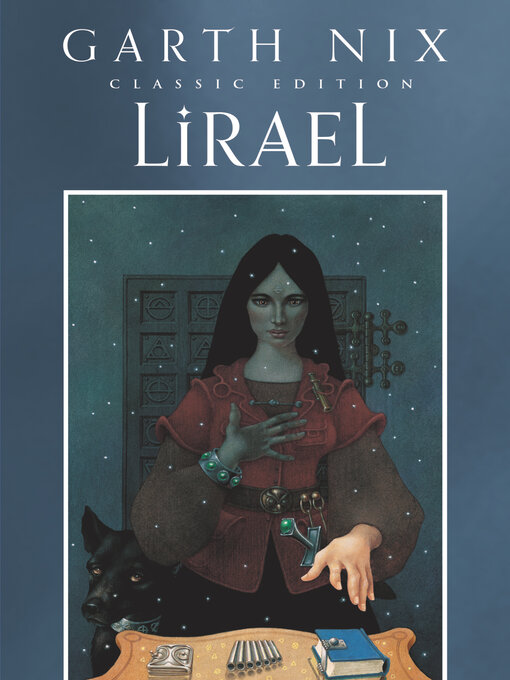
Lirael: Daughter of the Clayr


This is the second in Garth Nix's trilogy about a mythical "Old Kingdom" where magic rules and evil necromancers are always trying overtake the kingdom through death. The first book, Sabriel, is about a girl who is the "Abhorson in Waiting", a special necromancer who can combine charter and free magic to enter death and battle evil necromancers. She revives prince Touchstone, who had been trapped in death for 200 years and together they confront Kerrigor, the once heir to the Old Kingdom who had chosen instead to overthrow the ancient charter magic and rule eternally through death.

Lirael is the next Abhorson in Waiting, and as it turns out she is actually the half sister of Sabriel. She is also a daughter of the Clayr, which gives her the power to be both a necromancer and a remembrancer. And she is a librarian, to boot! ("There’s so much to see and smell here! Whole levels of the library that no one has been into for a hundred, a thousand years! Locked rooms full of ancient secrets. Treasure! Knowledge! Fun!" ) Together, she and Prince Sameth (son of Sabriel and once "Abhorson in Waiting" until he realized he was too much of a scaredycat to walk in death) confront another powerful and deadly necromancer, Hedge.

Okay, so this is pretty standard stuff, your basic good magic/bad magic fantasy. However, I kept reading these because the main characters are very interesting. They are both powerful and courageous, yet uncertain (as you might expect teenagers who are asked to save the kingdom might be). In a lot of ways, Sabriel and Lirael are similar to, say, Eragon; main characters who will fulfill some great destiny they do not yet fully understand, and which is revealed gradually through the relationships they have with other characters.

A well used theme in both books is the teacher/companion relationship. Luke had Obe Won Kenobe, Eragon had Brom, Edmond Dantes had Abbe Faria, and so on. Sabriel's companion is a cat and Lirael's is a dog (the Disreputable Dog- I loved that!), both are some kind of free magic constructs, and both are bound to serve. However both are also wise and in some instances far more important to the survival of the Old Kingdom than either Sabriel or Lirael understand. Nix uses the relationships between the companions to reveal history of the kingdom, the complexities of charter magic and generally to tie up loose ends in the plot. It works well enough for me; I don't really like it when the fantasy elements are too cryptic.

Monday, June 2, 2008

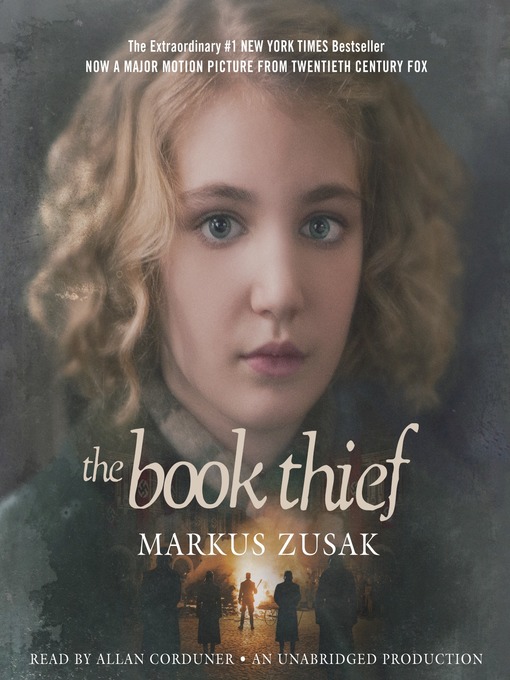
The Book Thief


From School Library Journal
Starred Review. Grade 9 Up–Zusak has created a work that deserves the attention of sophisticated teen and adult readers. Death himself narrates the World War II-era story of Liesel Meminger from the time she is taken, at age nine, to live in Molching, Germany, with a foster family in a working-class neighborhood of tough kids, acid-tongued mothers, and loving fathers who earn their living by the work of their hands. The child arrives having just stolen her first book–although she has not yet learned how to read–and her foster father uses it, The Gravediggers Handbook, to lull her to sleep when shes roused by regular nightmares about her younger brothers death. Across the ensuing years of the late 1930s and into the 1940s, Liesel collects more stolen books as well as a peculiar set of friends: the boy Rudy, the Jewish refugee Max, the mayors reclusive wife (who has a whole library from which she allows Liesel to steal), and especially her foster parents. Zusak not only creates a mesmerizing and original story but also writes with poetic syntax, causing readers to deliberate over phrases and lines, even as the action impels them forward. Death is not a sentimental storyteller, but he does attend to an array of satisfying details, giving Liesels story all the nuances of chance, folly, and fulfilled expectation that it deserves. An extraordinary narrative.–Francisca Goldsmith, Berkeley Public Library, CA

Tuesday, May 13, 2008

The Giver

Creeped me out! The overpowering societal control reminded me a lot of Margaret Atwood's Handmaid's Tale.

From School Library Journal
Grade 6-9-- In a complete departure from her other novels, Lowry has written an intriguing story set in a society that is uniformly run by a Committee of Elders. Twelve-year-old Jonas's confidence in his comfortable "normal" existence as a member of this well-ordered community is shaken when he is assigned his life's work as the Receiver. The Giver, who passes on to Jonas the burden of being the holder for the community of all memory "back and back and back," teaches him the cost of living in an environment that is "without color, pain, or past." The tension leading up to the Ceremony, in which children are promoted not to another grade but to another stage in their life, and the drama and responsibility of the sessions with The Giver are gripping. The final flight for survival is as riveting as it is inevitable. The author makes real abstract concepts, such as the meaning of a life in which there are virtually no choices to be made and no experiences with deep feelings. This tightly plotted story and its believable characters will stay with readers for a long time. --Amy Kellman, The Carnegie Library of PittsburghCopyright 1993 Reed Business Information, Inc.

Tuesday, April 29, 2008

Between a rock and Hard Place


A couple of cousins are obligated by family tradition to make a week paddle without adults in the Boundary Waters. A bear steals their food and because one is diabetic, they try to canoe back on the rivers instead of portaging. The results are bad.
I enjoyed this- it is very similar to Paulsen and Hobbs wilderness books. There are some mature themes so I would probably not recommend it to younger kids, but it is probably okay for older teens. Has some mature language, too.

Booklist Review: Books for Youth, Older Readers: /*Starred Review*/ Gr. 6-9. Alden Carter has written the ultimate YA survival novel, one that will immediately come to mind when a reader requests another book just like Gary Paulsen's Hatchet. Mark and his cousin Randy set off on their family's traditional male rite of passage, a 10-day canoe trip through the Minnesota lake country. Neither approaches the trip with enthusiasm. Mark, hardly the outdoor type, is leaving a girlfriend, and Randy is a diabetic who, Mark believes, uses his illness to avoid work. Yet both realize that in order to survive this experience, they'll need to work together; to enjoy it, get along. And, after a few initial skirmishes, they do begin to relish both the trip and each other's company as they canoe, camp, fish, and outsmart lake, terrain, and even a bear--that is, until the bear outsmarts them, felling a tree that protects the boys' food pack, which is Randy's lifeline. Carter does a masterful job of creating disquieting tension as the boys become more and more content--and adroit--with themselves and with their camping skills. Readers will know that it can't last. It doesn't, and the boys and readers alike are plunged into a terrifying race for survival. Next stop: movie rights! ((Reviewed January 1 & 15, 1996)) -- Frances Bradburn